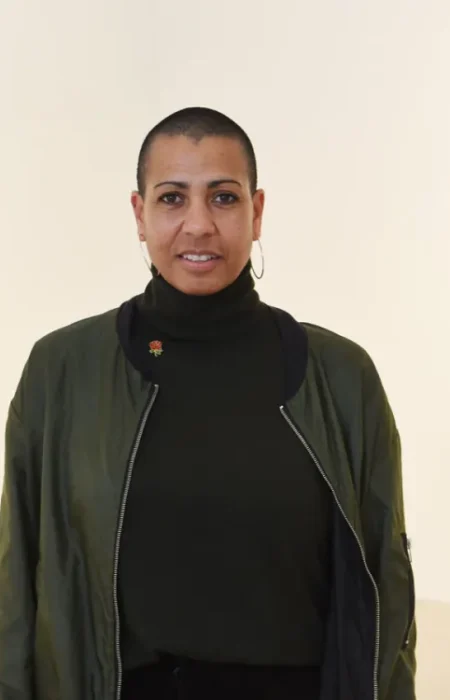



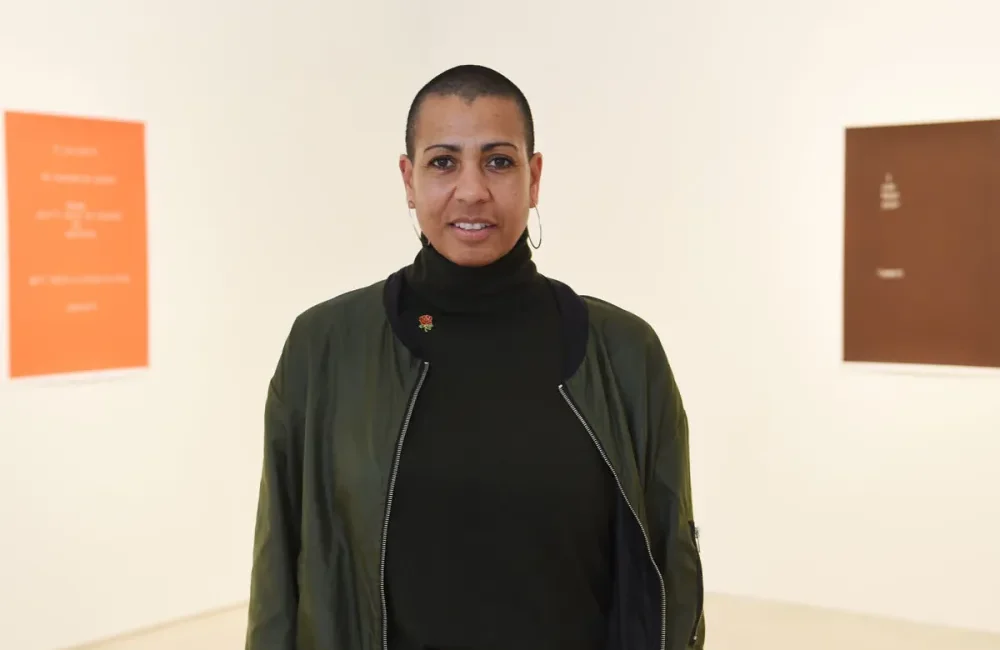
A video installation by Helen Cammock, displayed for the past nine months at London’s National Portrait Gallery, has recently become the center of public debate due to its references to former British Prime Minister Winston Churchill and the Bengal famine of 1943.
In the 40-minute work titled Persistence (2025), Cammock—who won the Turner Prize in 2019—reflects on multiple historical events, including Oliver Cromwell’s campaign in Ireland, which involved famine and mass suffering. In her narration, as reported by The Guardian, she draws a comparison, stating that Cromwell “starved people, en masse, a little like the wilful starvation of the Indian population by Winston Churchill.”
The controversy gained momentum after coverage in the British newspaper The Telegraph, where arts correspondent Craig Simpson described the work as inaccurately attributing intentional mass starvation to Churchill. He argued that the piece “criticises a number of national figures depicted in the taxpayer-funded gallery” and “suggests that Churchill used mass starvation as a weapon of war.”
Further escalation followed when historian Andrew Roberts, Baron Roberts of Belgravia and author of a 2018 Churchill biography, reportedly called the claim a “barefaced lie.” According to The Telegraph, he also sent a letter to the National Portrait Gallery’s board, which was supported by around 50 signatories, including Churchill’s grandson. The letter described the film as an “ideologically motivated rant.”
At the same time, other perspectives on the historical context remain contested. While some defenders of Churchill argue his policies did not directly cause the famine, a 2019 study examining climate and wartime conditions suggested that British policy decisions during the Churchill era were a significant contributing factor to the disaster, according to reporting from The Guardian at the time.
In a written statement provided to ARTnews, Cammock did not directly respond to the specific controversy. Instead, she described Persistence as a 40-minute moving image work exploring how portraiture functions historically and in the present. She emphasized questions of representation, asking whose stories are preserved, whose are excluded, and how systems of power shape historical narratives.
She further noted that the work was developed through extensive research conducted both within and beyond the National Portrait Gallery’s archives. According to Cammock, the piece moves between multiple histories—some explicitly present in the institution’s collection and others emerging through broader thematic connections between presence, absence, and power.
The National Portrait Gallery also issued a statement clarifying its position. It explained that, alongside its permanent collection, the institution commissions contemporary artists to create responses to its holdings. While the gallery supports artistic freedom, it does not necessarily endorse the views expressed in commissioned works.
Persistence was commissioned in 2023 as part of Artists First: Contemporary Perspectives on Portraiture, a broader exhibition featuring eight other artists, including Mary Evans, Charmaine Watkiss, Małgorzata Mirga-Tas, and the collaborative duo Mary Reid Kelley and Patrick Kelley.
The exhibition aims to revisit the gallery’s founding principles by shifting focus from the fame of portrayed subjects toward the vision of contemporary artists engaging with the collection. It brings together works that challenge traditional portraiture and reconsider its relevance in contemporary culture.
Alongside archival footage and imagery from the National Portrait Gallery itself, Persistence also references historical figures such as Ethel Smyth, Ada Lovelace, and Charlotte Mew. The work is described by the gallery as an exploration of absence and presence, using layered imagery and narration to question how portraiture intersects with power and memory.
In her statement, Cammock added that Persistence invites reflection on overlapping histories and evolving interpretations. Citing Nina Simone’s idea that artists should reflect their times, she emphasized that artistic inquiry often involves revisiting and questioning established narratives. She also underscored the importance of public institutions like the National Portrait Gallery in fostering ongoing dialogue about history, representation, and contemporary understanding.