
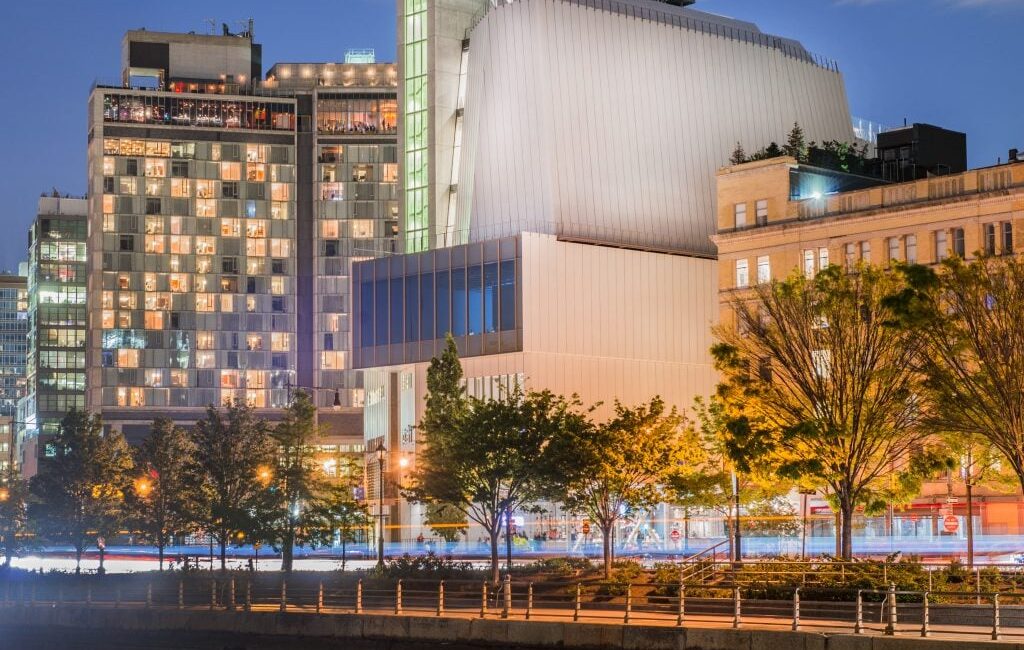
The Whitney Biennial has long served as America’s cultural barometer, and for its 82nd edition opening March 8, 2026, the reading is decisively digital. Technology is no longer a footnote but a central conversation, with 15 of the 56 participants explicitly working with technology – marking the Biennial’s strongest embrace of digital work to date.
The Millennial Shift and Curatorial Vision
Demographics
Curators Marcela Guerrero and Drew Sawyer have assembled a cohort where roughly 60% of artists were born after 1980, representing the “Millennial” generation. This demographic shift is significant, bringing digital-native perspectives to the forefront of the exhibition.
Core Themes: Relationality and Infrastructure
The curators’ central thesis focuses on “relationality,” examining connections ranging from interspecies kinships to “technological affinities”. This phrasing signals a fundamental shift: major institutions now view technology not as an experimental sidebar, but as the primary medium through which contemporary artists engage with reality. The curators emphasized that many artists they visited were exploring “infrastructures,” making visible the systems – servers, networks, and energy – that modern life relies upon.
Featured Artists & Digital Pioneers
- Samia Halaby: The Pioneer Returns
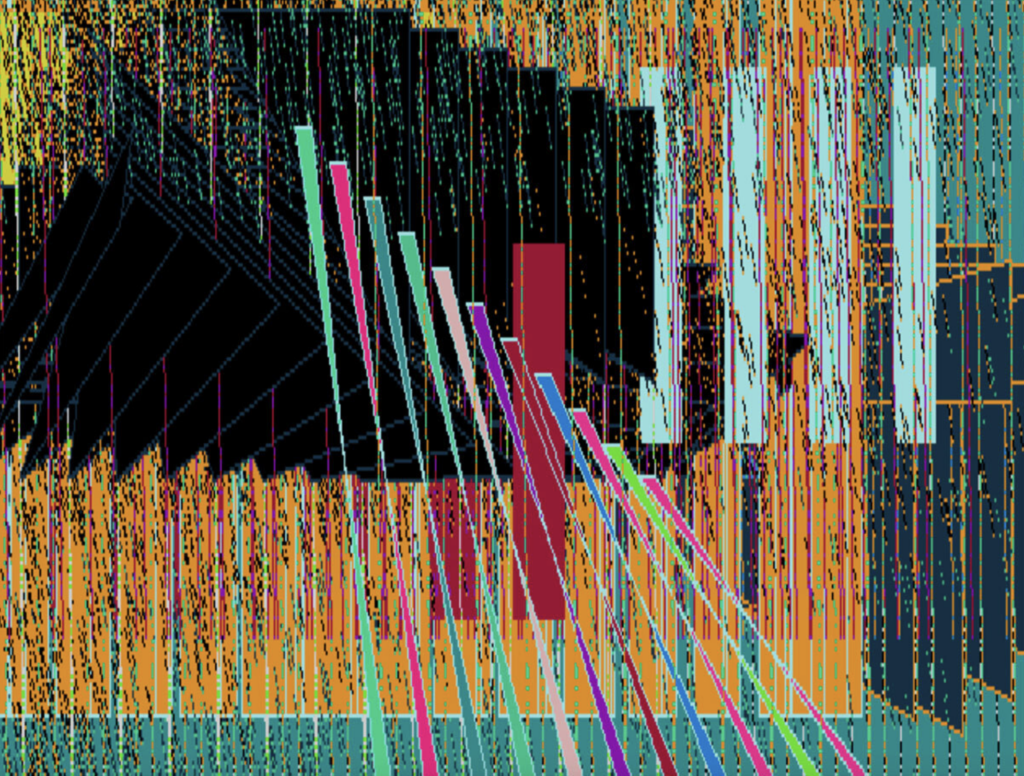
At 90 years old, Palestinian-American artist Samia Halaby is the exhibition’s oldest participant and arguably its most groundbreaking digital practitioner. Since purchasing an Amiga in 1986, she has coded “kinetic paintings” – moving abstract compositions where programming languages replace brushes. Her inclusion follows a celebrated run of exhibitions, including a digital billboard installation at Penn Station in 2025. Halaby’s work is pivotal because she approaches coding as an extension of painting’s fundamental language rather than a separate discipline.
- Joshua Citarella: Visualizing Subcultures
The exhibition validates internet culture as a serious subject through the inclusion of artists like Joshua Citarella. His work documents how online subcultures and algorithms shape political radicalization, positioning the digital realm as the primary site where modern culture is made and remade.
- Basel Abbas and Ruanne Abou-Rahme: Memory & Media
The duo Basel Abbas and Ruanne Abou-Rahme explore memory and amnesia, investigating how technology preserves or distorts collective history for displaced communities. Their multimedia work raises questions about how screens and archives mediate our relationship with the past.
Why This Matters
Institutional Validation
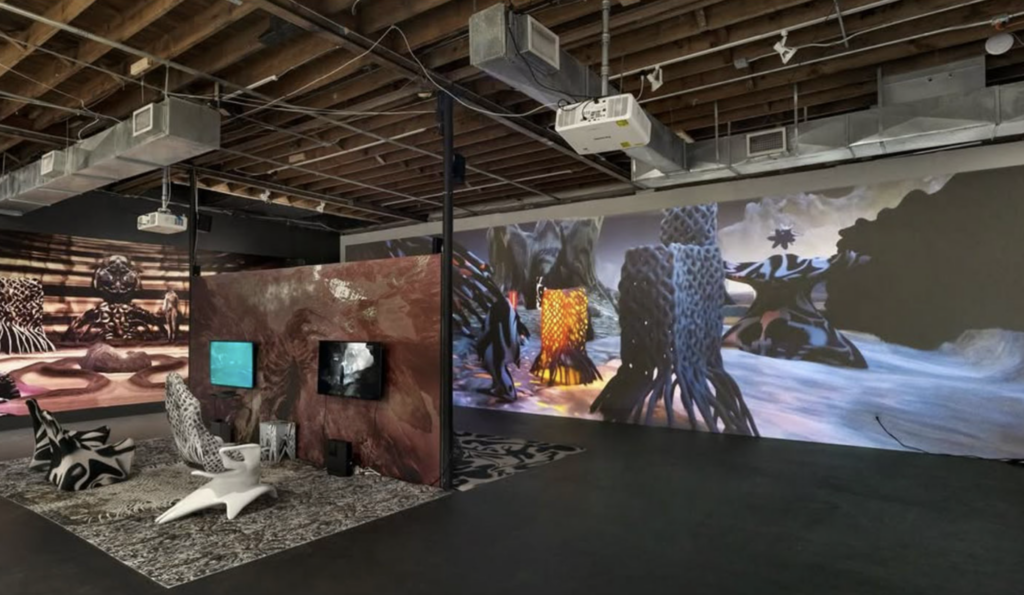
The Whitney’s dedication of significant space to AI, digital animation, and documentation sends a clear signal to collectors and critics: digital practice is serious art. This mainstreaming addresses historical struggles regarding the preservation and sale of digital work, validating it within the highest levels of the art market.
A New Reality
While the 2024 Biennial examined different notions of reality, the 2026 edition shifts focus to how we relate within that reality – relationships now fundamentally mediated by screens and algorithms. With the Whitney expanding free admission to visitors under 25, this work will reach a digital-native audience equipped to understand it. By moving these practices from the margins to the center, the 2026 Biennial declares that digital art is no longer the future – it is the present.
Other Articles
Our Identity: Collaborative Art as Urban Revitalization